Showing posts with label Charlotte Mason Enrichment. Show all posts

Monday, August 19, 2019

Journey: An Education for Life Retreat - Registration is Open!!


I've been busy working behind the scenes on school and retreat planning. I'm so excited to announce that registration is now open for Journey: An Education for Life retreat!! Join us, Saturday, October 19th for a day of homeschool encouragement and Christian Classical Charlotte Mason inspired camaraderie in West Central Wisconsin. Encounter ideas on mother culture, how to cultivate rhythm in your day, and spark a love of learning. Find renewed energy to start the year strong and continue throughout your homeschool journey.

Terri Woods, homeschool mom of 9 from Alabama will be our feature speaker. She has over 20 years experience home educating and has spoke at several homeschool events, including Wild+Free. You can find her on Instagram at https://www.instagram.com/woodsermom/ and https://www.instagram.com/field_and_forage/ I will be speaking as well. You can register, see the schedule, and read speaker bios here. I'm still finalizing a couple breakout sessions, but will post those as soon as information becomes available. 

Lunch will be provided with regular and gluten free options. Living books will be available for purchase. Door prizes will be given. Thirty minutes will be allowed between sessions for transition, networking, brainstorming, bonding, and discussion among participants. I hope this retreat will be a day of encouragement, inspiration, calming, and fun for all involved. I'd LOVE to meet you there!!

Monday, May 8, 2017

Reflections on A Handbook to Morning Time....

As part of my 2017-2018 academic planning and GHC preparation, I recently read A Handbook to Morning Time by Cindy Rollins. It's an extremely light read, but very inspirational for those already or wishing to implement morning time. We did 'morning time' for many years without knowing it had a name. However, we got away from it this year when Riley asked to be separated from Ruben in her studies. Throughout the year, I have consistently felt like something was missing. I have now put my finger on the lack being our morning time, which I definitely plan to implement again in the fall.

In the first chapter of A Handbook to Morning Time, Cindy gives a brief explanation of what morning time is and lays out the elements of morning time. In subsequent chapters, she goes more in depth on each of these elements. These elements are a big part of what makes a Charlotte Mason education and yet, many would see them as enrichment. The elements Cindy includes in morning time are...

Morning Meeting - where one takes care of family business including chore assignments/reminders and gives a list of activities for the day. This would be especially helpful for large families or to get everyone on the same page.
Bible Reading
Poetry
Memorization
Shakespeare
Plutarch
Composer/Artist Study
Language Arts - specifically grammar
Read Aloud
Nature Study - using field guides and living books to draw in nature notebook

I loved Cindy's conversational writing style as well as the end chapters on how to deal with toddlers, teens, and troublemakers. Cindy also included unedited samples of her morning time journals. One of my favorite things she wrote that I entered in my commonplace was....
Even though education is the training of affections, it is often a future hope. Some of you will have a certain temperament of child who will revel in Shakespeare. Great. But if reading Shakespeare is good, and it is, then you can afford to read it even when it is unappreciated; just keep it short. Do not weary the children with pushing through too much material. (p. 63)
Cindy concludes with a plan and list of recommended morning time resources. A Handbook to Morning Time is a short 112 page how to handbook that really packs a powerful punch. I would recommend it if you're thinking about beginning morning time or if you're struggling in your morning time. It's a handbook that I will definitely be referencing throughout my homeschool planning years.

Saturday, July 9, 2016

Enrichment - Charlotte Mason Style Electives: Nature Study....


Reading about nature is fine, but if a person walks in the woods and listens carefully, he will learn more than what is in books, for they speak with the voice of God. - George Washington Carver

Oh, how I loved this quote by G.W. Carver from the first time I read it!  It put me in mind of Charlotte Mason...
Now the knowledge of Nature which we get out of books is not real knowledge; the use of books is, to help the young student to verify facts he has already seen for himself.  (Charlotte Mason Vol. 2, p. 261)
In the chief duty of man, his duty towards God, Nature is an exquisite instructor. (Charlotte Mason Vol. 4, Book 2, p. 99) 
Nature study is very important in a Charlotte Mason education. Getting outside in nature was the basis for science in Mason's schools, particularly in the elementary grades.  However, in our modern society, nature study can feel like a burden. We have become sedentary, parked behind digital devices for hours on end.  It's easier to think about nature study or look out the window and wish, rather than get up and go outside.  I must confess, I too have been lazy in committing to nature study.  I have the desire, but in the day-to-day, I just don't always take the time to do it.

Charlotte said that children should get out-of-doors for a walk everyday.  Yes, this would be ideal, but I'm here to tell you, one day a week is better than nothing at all.  Don't let ghosts of Mason past make you feel guilty.  If you're feeling overwhelmed by nature study, start small.  Simply commit to taking your children outside one day a week.  Now is a great time to start, especially here in Wisconsin because the thought of starting nature study in January is definitely not appealing to me in below zero temperatures, as is typical here.  However, summer is a fabulous time to see a variety of birds, wildlife, plants, and trees.

Even though, I have been sporadic, here on the farm, we are fortunate, our kids are outside on a daily basis with or without me.  Today, Ruben found a Leopard Frog while mowing the lawn.  I actually happened to be lying outside under an oak tree reading Tolstoy's Anna Karenina when I heard his holler of excitement and the rest of the kids went running.  Ruben easily identified it and Riley knew it was a male because of past nature studies we'd done.  This prompted me to see how important those impromptu trips outside really are.  I was surprised by how much the kids retained.

Nature walks don't have to be a big ordeal.  Simply head out into your yard or a neighborhood park.  I remember reading about Orville and Wilbur Wright's mother packing a picnic and spending the day in the woods.  She would let her children romp and roam, making discoveries on their own.  Of course, they came back to her with questions, as will your children.  It's OK if you're a nature study novice and don't have all the answers.  After a period of time, you go back indoors and bring out the books to find answers to those questions.

Charlotte Mason recommended starting nature study with very young children, however, don't feel like you've missed the boat if your child is older.  Nature can be enjoyed by anyone from 1 to 100.  Just do it!

Once you've developed the habit of spending time outdoors, you could start a nature calendar of firsts throughout the year...
It is a capital plan for children to keep a calendar - the first oak-leaf, the first tadpole, the first cowslip, the first catkin, the first ripe blackberries, where seen, and when.  The next year they will know when and where to look out for their favourites, and will, every year, be in a condition to add new observations.  Think of the zest and interest, the object, which such a practice will give to daily walks and little excursions.  There is hardly a day when some friend may not be expected to hold a first 'At Home'.  (Charlotte Mason, Vol. 1, p. 54)
Next, you could do a month-by-month study in order to recognize seasons....
They are expected to do a great deal of out-of-door work in which they are assisted by The Changing Year, admirable month by month studies of what is to be seen out-of-doors. They keep records and drawings in a Nature Note Book and make special studies of their own for the particular season with drawings and notes. (Charlotte Mason, Vol. 6, p. 219)
Other ideas for study are learning to identify birds and their songs or selecting a tree to follow throughout the year.  Turn over a log and see what's underneath, look at the clouds and notice what shapes you see, catch snowflakes and look at the different shapes.  The possibilities are endless.

You'll notice Charlotte mentions a Nature Note Book in several of the quotes above.  Riley is my Nature Note Book connoisseur.  She has kept a variety of notebooks over the years as you can see pictured below.  I personally really like Clare Walker Leslie's books on keeping a nature journal.   She has written several books which are very helpful, whether you're a beginner or a more seasoned naturalist.  Once you've established what kind of notebook your children will use, you can either take the notebooks outside to draw in while on your nature walk, talk photos of things they may want to draw, or let the kids bring in specimens to study and draw in their notebooks once your nature walk is complete. Unless, you're drawing a scene, the later is our preferred method.


A few other helpful nature study resources are:

Jimmie's Collage

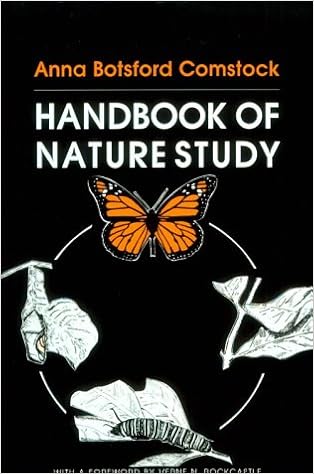
Handbook of Nature Study

Nature Study as Independent Work

Brandy Vencel on Nature Study

Carol at Journey and Destination on Nature Study in Australia

Celeste at Joyous Lessons on Nature Study along the Pacific

Ambleside Online

Nadene at Practical Pages on Nature Study in South Africa 
 

Wednesday, January 13, 2016

Update on Plutarch Lives...


We finished studying Plutarch's Timoleon and have now moved on to Aemilius Paulus.  I'm still using Anne White's Study Notes from Ambleside Online.  Before we started, I printed the notes and bound them with the ProClick binder.  For me, it is much easier to grab my hard copy than to bring it up online every week.

We study Plutarch every Tuesday.  I usually review from the previous week, read the introduction aloud, and we discuss any potential new vocabulary words.  Then I read aloud the assigned section, stopping after 1-2 paragraphs for discussion/narration.  Originally, I read straight through and asked for narration at the end, but this was very difficult, even for me, so I have since broke it into smaller chunks and make more frequent stops. This seems to work much better.

While the kids are narrating, I make notes.  The notes are primarily from their dictation as well as our discussion.  I read it back to them at the very end and they make additions/corrections.  I then use those notes for review the following week.


Overall, our Plutarch study usually takes anywhere from 15-25 minutes, depending on the length and breadth of the passage.  Unfortunately, our kids are really bucking Plutarch.  It's one of their least favorite subjects. Initially, I thought it would pass with time and as their understanding grew.  I even thought there was a small light at the end of Timoleon.  However, they have continued their negativity as we are about half way through Aemilius Paulus.  I attribute this to the level of difficulty of the study.  I do plan to finish Aemilius Paulus, however, I will not start a third life this year.  We will pick up Plutarch again at some point in the future.

Monday, September 7, 2015

Enrichment - Charlotte Mason Style Electives: Composer Study...


Composer study is part of the art of music studied in Charlotte's schools along with learning folk songs and hymns. It was called Musical Appreciation, in which, one particular composer was set for each term.  In an article written in The Parents' Review, Marjorie F. Ransom, ex-student of the House of Education, states:
About six works by some great composer are chosen for study each term. These compositions are played or sung to the children constantly and studied carefully. The children are taught something about the form, harmonic structure, thematic development of the composition and some information is given about the life of the composer. An article appears every term in the Parents' Review on the composer and his works, which is a great help to the teacher or parent who is giving the musical appreciation lessons.
Although we don't have the gift of the Parents' Review composer articles, in this day and age, we are blessed with many other resources to draw from.  One of which is Ambleside Online.  They offer a free "Composer Schedule" with biographical information, music downloads, and book suggestions/links on various composers. 

I've decided to incorporate composer study into our schedule this year.  We are studying Johannes Brahms the first term using "The Young Brahms" by Sybil Deucher.  I've scheduled composer study on Mondays in our Circle Time.  I intend to read a section from Deucher's book each Monday, as well as play Brahms music whenever possible over the next twelve weeks.  Ambleside Online has a list of suggested pieces that I'll draw from.  I plan to use Youtube and other online sources to listen to Brahms music.  Today we're listening to Variations on a Theme of Haydn

For further conviction on incorporating composer study/music appreciation into your homeschool, check out Delight in Music Appreciation by Tina Fillmer.

Monday, August 17, 2015

Enrichment - Charlotte Mason Style Electives: The Study of Art...

There are few subjects regarded with more respect and less confidence in our schools than this of 'Art.'
- Charlotte Mason, A Philosophy of Education, p. 213

Students in Charlotte's schools not only produced art, but they studied art in order to appreciate.  One might say, the subject of art was three dimensional, or, more simply, divided into three parts: (1) picture study, (2) drawing, and (3) handicrafts.  Let's take a look at what Charlotte said about each...

Picture Study
How do we prepare a child, again, to use the aesthetic sense with which he appears to come provided?  His education should furnish him with whole galleries of mental pictures, pictures by great artists old and new; - Israels' Pancake Woman, his Children by the Sea; Millet's Feeding the Birds, First Steps, Angelus; Rembrandt's Night Watch, The Supper at Emmaus; Velasquez's Surrender of Breda, - in fact, every child should leave school with at least a couple of hundred pictures by great masters hanging permanently in the halls of his imagination, to say nothing of great buildings, sculpture, beauty of form and colour in things he sees.  Perhaps we might secure at least a hundred lovely landscapes too, - sunsets, cloudscapes, star-light nights.  At any rate he should go forth well furnished because imagination has the property of magical expansion, the more it holds the more it will hold.  (A Philosophy of Education, p. 43)
We recognise that the power of appreciating art and of producing to some extent an interpretation of what one sees is as universal as intelligence, imagination, nay, speech, the power of producing words.  But there must be knowledge and, in the first place, not the technical knowledge of how to produce, but some reverent knowledge of what has been produced; that is, children should learn pictures, line by line, group by group, by reading, not books, but pictures themselves.  A friendly picture-dealer supplies us with half a dozen beautiful little reproductions of the work of some single artist, term by term.  After a short story of the artist's life and a few sympathetic words about his trees or his skies, his river-paths or his figures, the little pictures are studied one at a time; that is, children learn, not merely to see a picture but to look at it, taking in every detail.  Then the picture is turned over and the children tell what they have seen, - a dog driving a flock of sheep along a road but nobody with the dog.  Ah, there is a boy lying down by the stream drinking.  It is morning as you can see by the light so the sheep are being driven to pasture, and so on; nothing is left out, the discarded plough, the crooked birch, the clouds beautiful in form and threatening rain, there is enough for half an hour's talk and memory in this little reproduction of a great picture and the children will know it wherever they see it, whether a signed proof, a copy in oils, or the original itself in one of our galleries.  (A Philosophy of Education, p. 214)
So here we have Charlotte explaining the importance of picture study.  The idea being that we supply our children with beautiful images that they will remember throughout their life.  Further on, she explains how to go about picture study by choosing half a dozen pictures by one artist per term.  First, we read a short biography on the artist's life.  Next, the child spends some time studying one of the pictures.  After which, they turn it over.  Lastly, they narrate the image he/she saw.  Every one to two weeks, we would expose a new picture throughout the term until all six were studied.  

In this day and age, there are many resources one could draw from for picture study. 


We have used Mike Venezia's Getting to Know the World's Greatest Artists series in the past.  I'm looking at the possibility of A Weekend With... books as the kids get older.  Angel has referenced Janson's History of Art throughout high school.  We have also looked at picture images online.  Whatever source you choose, be sure the book is living and be sure the images are original. 

Drawing
So, too, of pictorial art; at last we understand that every one can draw, and that, because to draw is delightful, every one should be taught how; that every one delights in pictures, and that education is concerned to teach him what picture to delight in.  (A Philosophy of Education, p. 329)
Students in Charlotte's schools learned how to draw.  I have not taught formal drawing in our homeschool.  However, the kids have used a variety of drawing books throughout.  They did a great deal of drawing a couple of years ago in our Psalms study.  They also draw/illustrate narrations and keep nature notebooks where they draw things they observe in nature.  Last year, Riley and Ruben took formal art classes through our local homeschool group in which, they worked with a variety of mediums.  One of these summers, I would love to work through a book like Mona Brookes' Drawing with Children

Handicrafts
The points to be borne in mind in children’s handicrafts are: (a.) that they should not be employed in making futilities such as pea and stick work, paper mats, and the like; (b.) that they should be taught slowly and carefully what they are to do; (c.) that slipshod work should not be allowed; (d.) and that therefore, the children’s work should be kept well within their compass. (Home Education, p. 315)
I have done a variety of posts on our handicrafts in the past so I'm not going to spend a lot of time here.  I believe the most important thing to remember regarding handicrafts is the child should be learning to make something useful.  Handicrafts are not the typical arts and crafts, paper plates, construction paper, glue, types of projects.  They involve skillful crafts that take time to master such as leather craft, knitting, sewing, wood carving, etc. 

Wednesday, August 5, 2015

Enrichment - Charlotte Mason Style Electives: Studying Plutarch

In Form II, Citizenship becomes a definite subject rather from the point of view of what may be called the inspiration of citizenship than from that of the knowledge proper to a citizen, though the latter is by no means neglected.  We find Plutarch's Lives exceedingly inspiring.  These are read aloud by the teacher (with suitable omissions) and narrated with great spirit by the children.  (Charlotte Mason, A Philosophy of Education, p. 185)
We started last school year with the best of intentions.  I really wanted to study and love Plutarch with Riley.  We began with Timoleon and proceeded for about three weeks.  Unfortunately, Riley was less than thrilled with Plutarch and life took over.  I am sad to say, we did not finish.  In hind site, I think I introduced her to too many new subjects at one time (i.e. Shakespeare, Latin, Plutarch, etc.) and she just wasn't ready. 

However, this fall, as we begin anew, I intend to try again!  We will pick up with Timoleon, more than likely, reviewing a bit, then starting where we left off.  I intend to study one life each term, much the way Ambleside Online recommends here.   We did use Anne White's study guide last year and I plan to use it again.  

Regarding translation, Ambleside recommends North's Plutarch.  However, after purchasing it, I realized that Timoleon was not included in my copy.  Therefore, I ended up buying the Dryden Translation as well, which appears more complete.  You do not need the actual book if you're using White's study guides. Plutarch's Lives is also FREE online.  I personally prefer a hard copy to hold in my hands.  

In Charlotte's schools, Plutarch's Lives was studied as citizenship rather than history.  Although, I see a definite benefit for history as well.  Further on in A Philosophy of Education, Charlotte says this...
Now Plutarch is like the Bible in this, that he does not label the actions of his people as good or bad but leaves the conscience and judgment of his readers to make the classifications. What to avoid and how to avoid it, is knowledge as important to the citizen whether of the City of God or of his own immediate city, as to know is good and how to perform the same.  Children recognise with incipient weariness the doctored tale as soon as it is begun to be told, but the human story with its evil and its good never flags in interest....The boy, or girl, aged from ten to twelve, who is intimate that they influence his thought and conduct, has learned to put his country first and to see individuals only as they serve or dis-serve the State.  Thus he gets his first lesson in the science of proportion.  Children familiar with the great idea of a State in the sense, not of a government but of the people, learn readily enough about the laws, customs and government of their country; learn, too, with great interest something about themselves, mind and body, heart and soul, because they feel it is well to know what they have it in them to give to their country.  
I'd love to hear more about your study of Plutarch.  Please feel free to comment below...

Wednesday, July 29, 2015

Enrichment - Charlotte Mason Style Electives: Hymn Study...

As I'm planning for our upcoming year, I thought I'd write a few posts on what some may call electives, however, Charlotte Mason considered these subjects necessary...
The Habit of Music. - As for a musical training, it would be hard to say how much that passes for inherited musical taste and ability is the result of the constant hearing and producing of musical sounds, the habit of music, that the child of musical people grows up with.  Mr. Hullah maintained that the art of singing is entirely a habit - that every child may be, and should be, trained to sing.  Of course, transmitted habit must be taken into account.  It is a pity that the musical training most children get is of a random character; that they are not trained, for instance, by carefully graduated ear and voice exercises, to produce and distinguish musical tones and intervals. (Vol 1, Home Education, p. 133-134)

Last year, I decided to incorporate hymn study into our day.  Our school age kids were 4th and 5th grade.  I have an old hymnal that I used to choose one hymn and one folk/patriotic song for each of our three terms.  One to two days per week, we would sing the chosen songs for a twelve week period.   This worked for the first and second term.  However, our kids entered a formal homeschool choir program in the third term so we did not continue hymn study at home for that term.  Here are the songs we learned last year:

Term 1

Star Spangled Banner
Come Thou Fount

Term 2

America the Beautiful - Oh Beautiful for Spacious Skies
O Come, All Ye Faithful

Term 3

Homeschool choir
Continued practice/review with Term 1 and 2 songs

The kids were also singing in church this whole time, including singing to the congregation once a month throughout the school year with children's choir.  Last December, RileyAnn was Mary in the Christmas play and had to sing a solo.  This was quite an experience for her at 11 years old!

This year, I intend to continue hymn study.  I haven't chose the songs yet, but I know I will weave it into our morning time.  A couple days ago, I downloaded a Thanksgiving Hymn Study by Kim Sorgius through Homeschool Giveaways...hurry, it's only FREE until 08-03-2015!  More than likely, I won't use the hymn study as suggested, primarily, because of the rapid suggested pace.  However, I really like the way it's laid out with copywork and a short biography on the author of the hymn.  I also like the idea of learning hymns of thanksgiving and tracking daily blessings.  I'm thinking of incorporating one of the hymns from the study for our first 12 week term, along with a folk song.  

Here are some other websites with hymn study suggestions and tips:

Jimmie's Collage - Beginning Hymn Study
Ambleside Online - Hymn Rotation Schedule
Charlotte Mason in Community - Studying Hymns and Songs

Do you do hymn study?  If so, what is your method?  Please feel free to comment below...

Tuesday, April 9, 2013

What About Shakespeare?

 
To read or not read...that is the question?

We recently read about William Shakespeare in The Mystery of History Volume III.  Have you ever heard of ghost writers?   I had no idea there was speculation surrounding whether or not Shakespeare was the real author of  plays he's credited with.  I personally had not read Shakespeare or studied his works.  I often wonder about the necessity of it. 

After reading this article by LindaFay at Charlotte Mason Help, HUFI, I felt convicted to give it a try.  We read "As You Like It" from Lambs Tales From Shakespeare by Charles and Mary Lamb.  I was quite surprised by it and found it very enjoyable.  The kids liked it as well. 

Have you incorporated Shakespeare into your studies?